
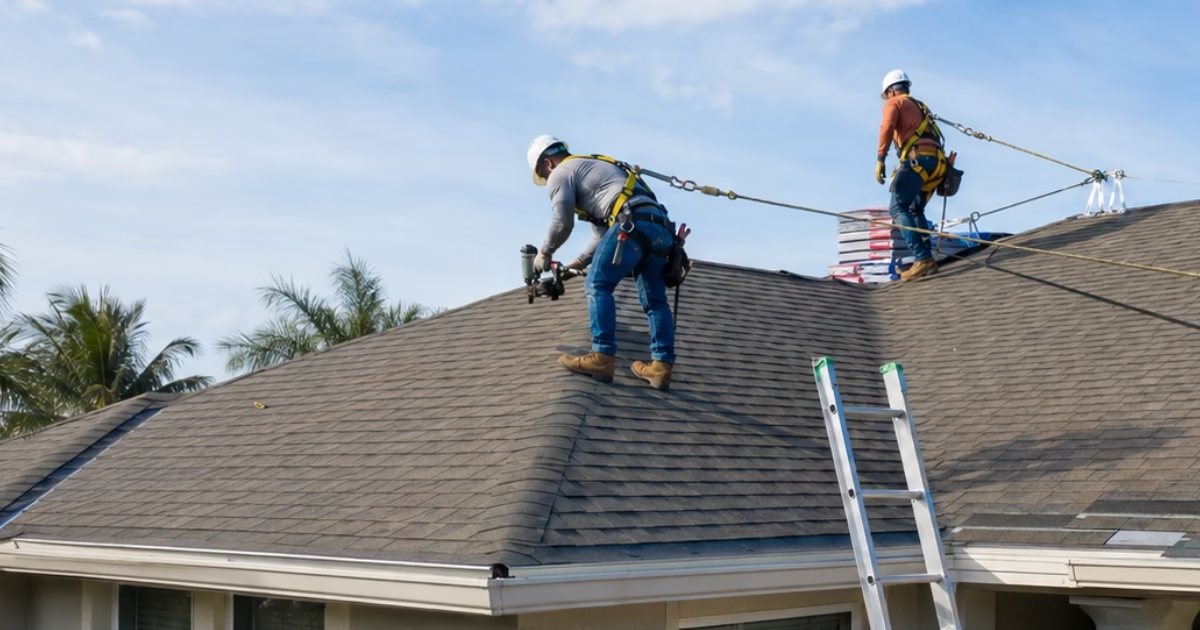
A July 2026 OSHA enforcement action in Central Florida is a timely reminder that roofing safety cannot live only in a binder. The OSHA roofing fall protection requirements must be visible in daily planning, equipment, training, and supervision. OSHA proposed $349,754 in penalties against a Florida roofing contractor after inspectors reported workers exposed to falls of 10 feet and 9 feet without fall protection. The citations and penalties are proposed—not final—but the case gives contractors a practical list of controls to review now.
What happened at the Florida roofing sites?
According to the July 23 OSHA news release, investigators cited Orchids Builders LLC for two willful and four repeat violations. Beyond the reported fall exposures, OSHA said the employer did not maintain written fall-protection training certificates, did not ensure eye protection was used with nail guns, and allowed ladders whose side rails did not extend at least 36 inches above the roof landing. The company had 15 business days from receipt of the citations to comply, request an informal conference, or contest the findings.
What do OSHA roofing fall protection requirements cover?
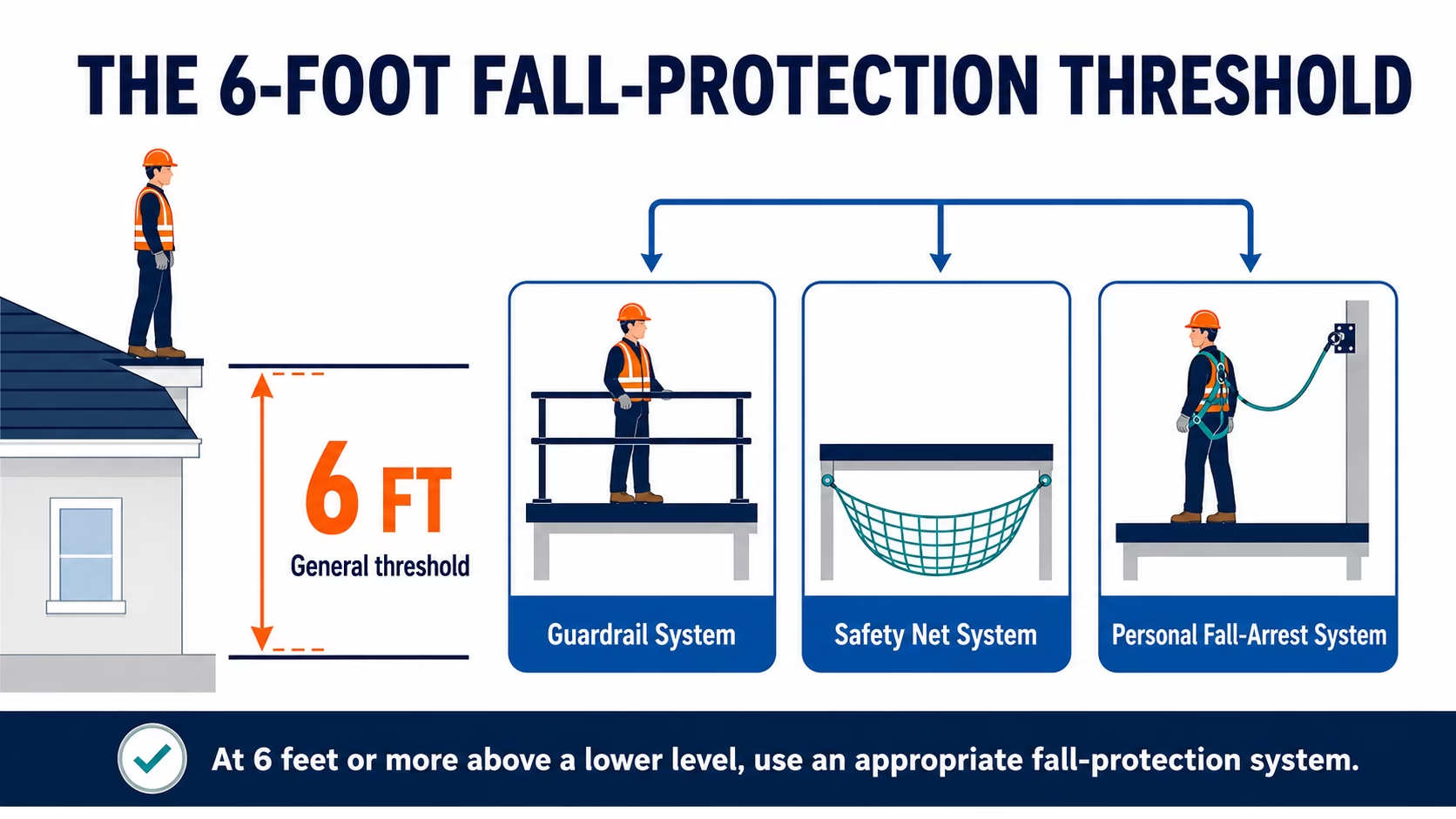
For construction, OSHA generally requires fall protection when employees work 6 feet or more above a lower level. Under 29 CFR 1926.501, employers must first determine that walking and working surfaces have the strength and structural integrity to support employees safely. For unprotected sides and edges, leading edges, steep roofs, and residential construction, compliant systems commonly include guardrails, safety nets, or personal fall-arrest systems. Low-slope roofing work has additional permitted combinations, including warning-line systems under specified conditions.
The right setup depends on the roof, the task, and the applicable standard. A generic harness rule is not enough. Contractors need a site-specific plan that addresses access, anchors, equipment inspection, employee roles, and the possibility of rescue after a fall.
2026 roofing safety checklist for Florida contractors
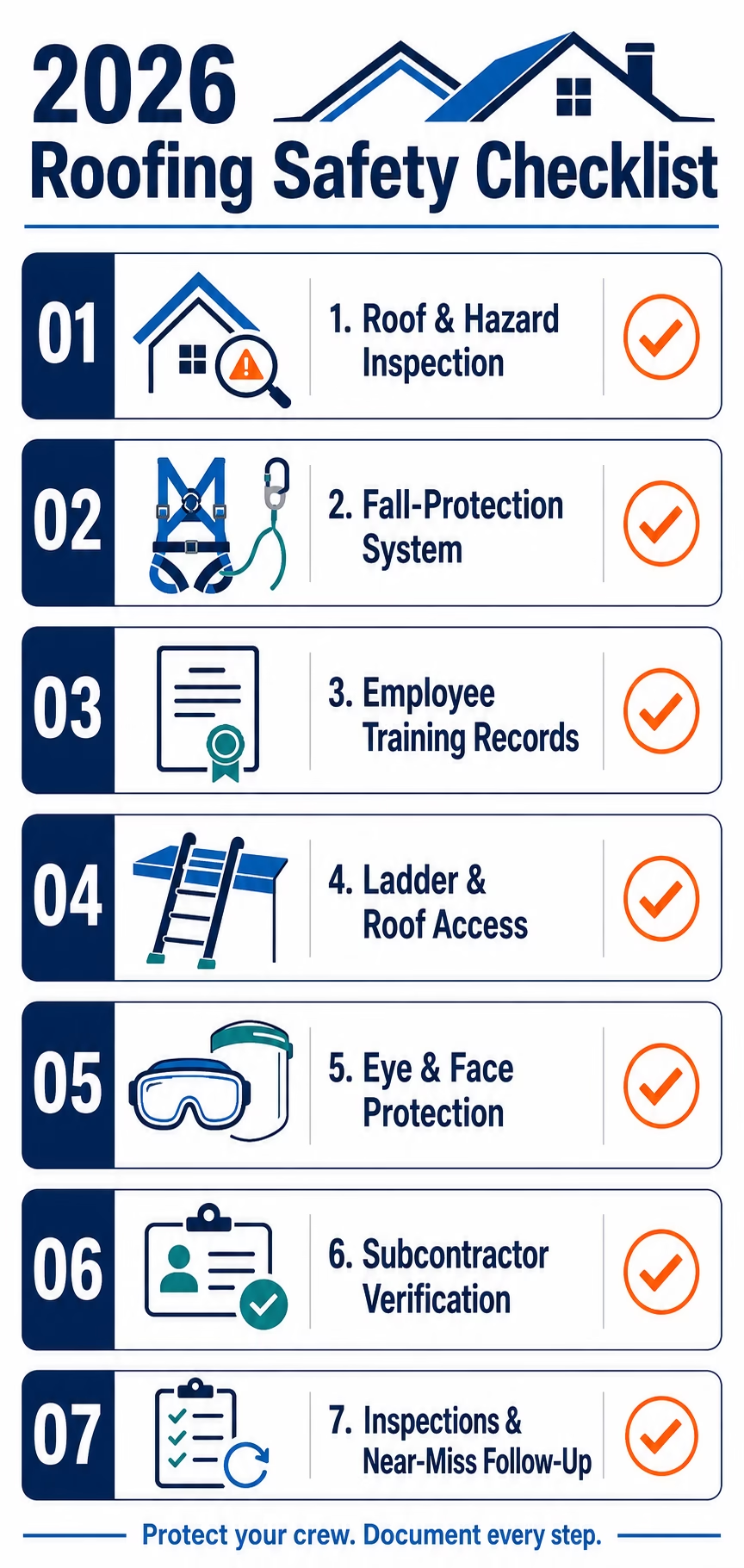
Inspect the roof before work begins
Confirm surface strength, roof pitch, unprotected edges, openings, skylights, access points, weather, and nearby electrical hazards. Assign a competent person to evaluate changing conditions and stop work when controls are missing or no longer effective. Document the pre-job review so crews begin with the same plan.
Match the fall-protection system to the exposure
Identify which employees will be exposed at 6 feet or more and select a system allowed for the specific work. Inspect harnesses, connectors, lifelines, anchors, guardrails, and warning lines before use. Verify compatibility and follow manufacturer instructions. Keep materials and tools away from edges, and plan how a suspended worker would be rescued promptly.
Train employees—and keep the record
OSHA’s training rule requires training for employees who may be exposed to fall hazards. A qualified competent person must cover the hazards and the correct use of applicable systems. The employer must maintain the latest written certification with the employee’s identity, training date, and trainer’s or employer’s signature. Retraining is needed when workplace conditions, equipment, or employee knowledge changes.
Check ladders and roof access
When a portable ladder provides access to an upper landing, OSHA requires its side rails to extend at least 3 feet above the landing, unless the alternative securing and grasping-device provisions apply. Place ladders on stable surfaces, secure them against displacement, keep the top and bottom areas clear, and remove defective ladders from service.
Use task-appropriate eye and face protection
Nail guns, cutting, grinding, and flying debris create hazards beyond falls. Under OSHA’s eye and face protection standard, affected employees must use appropriate protection; side protection is required when flying objects are a hazard. Make PPE checks part of the same daily review as fall protection.
Verify subcontractors before they mobilize
Safety responsibilities and insurance documentation should be clear before work starts. The Florida Division of Workers’ Compensation states that construction employers with one or more employees generally must carry workers’ compensation coverage. Contractors must verify required coverage for subcontractors; if a subcontractor lacks coverage for its employees, those workers may become the contractor’s responsibility for workers’ compensation benefits.
Close the loop after inspections and near misses
Record corrective actions, assign an owner, and confirm completion. Use short toolbox talks to share lessons from a near miss, equipment issue, or changed job condition. Connect the field process to incident reporting, payroll records, certificates of insurance, claims handling, and return-to-work procedures. That turns a checklist into a repeatable construction safety program.
Why safety is business structure—not paperwork
OSHA’s Recommended Practices for Safety and Health Programs emphasize finding and fixing hazards before an injury or inspection. That proactive approach can protect employees, support compliance, reduce disruption, and strengthen overall operations. It also gives owners better visibility into who is trained, which subcontractors are cleared, and whether corrective actions are complete.
Workers’ compensation and safety serve different purposes: coverage does not replace hazard controls, and a safety plan does not replace required insurance. They work best when the administrative and field systems reinforce each other. For more Florida-specific guidance, see Paycorp’s guide to workers’ comp for contractors in Florida.
Where a contractor-focused PEO can help
The employer remains responsible for worksite safety and OSHA compliance. However, a contractor-focused PEO can help organize the administrative foundation around the job: payroll, workers’ compensation, HR support, certificates, and risk-management resources. Paycorp’s risk management and safety programs are designed to help businesses identify hazards and build practical mitigation strategies. Learn more about how a PEO for contractors in Florida can connect back-office structure with field operations.
Frequently asked questions
At what height is fall protection required in construction?
OSHA’s construction standard generally requires fall protection at 6 feet or more above a lower level. The exact system and any permitted alternative depend on the work activity and roof type, so contractors should review the applicable provision for each job.
Does OSHA require written fall-protection training records?
Yes. Employers must prepare and maintain the latest certification record showing the trained employee’s identity, the training date or dates, and the signature of the trainer or employer.
Does a safety program replace workers’ compensation coverage?
No. Safety controls aim to prevent injuries, while workers’ compensation responds when a covered work-related injury or illness occurs. Florida construction employers should confirm their specific coverage obligations and maintain both systems.
Build a safer, more controlled operation
A serious safety program is not about reacting to headlines. It is about giving supervisors and crews a clear process they can repeat on every roof. If your company needs stronger coordination among payroll, workers’ compensation, HR, and risk-management resources, explore Paycorp’s contractor-focused PEO services or request a fast quote.
Educational notice: This article provides general information and does not replace legal, safety, or insurance advice. Employers should evaluate the rules and coverage requirements that apply to their specific operations.